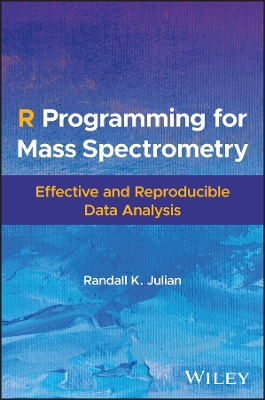
R Programming for Mass Spectrometry
 -15%
portes grátis
-15%
portes grátis
R Programming for Mass Spectrometry
Effective and Reproducible Data Analysis
Julian, Randall K.
John Wiley & Sons Inc
04/2025
336
Dura
Inglês
9781119872351
15 a 20 dias
Descrição não disponível.
Foreword ix
Preface xi
Acknowledgments xv
About the Companion Website xvii
1 Data Analysis with R 1
1.1 Introduction 1
1.2 Modern R Programming 2
1.3 Bioconductor 17
1.4 Reproducible Data Analysis 18
1.5 Summary 20
2 Introduction to Mass Spectrometry Data Analysis 21
2.1 An Example of Mass Spectrometry Data Analysis 21
2.2 Using the Tidyverse in Mass Spectrometry 25
2.3 Dynamic Reports with R Markdown 39
2.4 Summary 40
3 Wrangling Mass Spectrometry Data 41
3.1 Introduction 41
3.2 Accessing Mass Spectrometry Data 41
3.3 Types of Mass Spectrometry Data 44
3.4 Result Data 58
3.5 Example of Wrangling Data: Identification Data 60
3.6 Wrangling Multiple Data Sources 63
3.7 Summary 74
4 Exploratory Data Analysis 75
4.1 Introduction 75
4.2 Exploring Tabular Data 75
4.3 Exploring Raw Mass Spectrometry Data 83
4.4 Chromatograms and Other Chemical Separations 101
4.5 Summary 112
5 Data Analysis of Mass Spectra 113
5.1 Introduction 113
5.2 Molecular Weight Calculations 114
5.3 Statistical Analysis of Spectra 124
5.4 Summary 150
6 Analysis of Chromatographic Data from Mass Spectrometers 151
6.1 Introduction 151
6.2 Chromatographic Peak Basics 151
6.3 Fundamentals of Peak Detection 160
6.4 Frequency Analysis 188
6.5 Quantification 207
6.6 Quality Control 226
6.7 Summary 229
7 Machine Learning in Mass Spectrometry 231
7.1 Introduction 231
7.2 Tidymodels 232
7.3 Feature Conditioning, Engineering, and Selection 233
7.4 Unsupervised Learning 244
7.5 Using Unsupervised Methods with Mass Spectra 247
7.6 Supervised Learning 256
7.7 Explaining Machine Learning Models 283
7.8 Summary 287
References 289
Index 301
Preface xi
Acknowledgments xv
About the Companion Website xvii
1 Data Analysis with R 1
1.1 Introduction 1
1.2 Modern R Programming 2
1.3 Bioconductor 17
1.4 Reproducible Data Analysis 18
1.5 Summary 20
2 Introduction to Mass Spectrometry Data Analysis 21
2.1 An Example of Mass Spectrometry Data Analysis 21
2.2 Using the Tidyverse in Mass Spectrometry 25
2.3 Dynamic Reports with R Markdown 39
2.4 Summary 40
3 Wrangling Mass Spectrometry Data 41
3.1 Introduction 41
3.2 Accessing Mass Spectrometry Data 41
3.3 Types of Mass Spectrometry Data 44
3.4 Result Data 58
3.5 Example of Wrangling Data: Identification Data 60
3.6 Wrangling Multiple Data Sources 63
3.7 Summary 74
4 Exploratory Data Analysis 75
4.1 Introduction 75
4.2 Exploring Tabular Data 75
4.3 Exploring Raw Mass Spectrometry Data 83
4.4 Chromatograms and Other Chemical Separations 101
4.5 Summary 112
5 Data Analysis of Mass Spectra 113
5.1 Introduction 113
5.2 Molecular Weight Calculations 114
5.3 Statistical Analysis of Spectra 124
5.4 Summary 150
6 Analysis of Chromatographic Data from Mass Spectrometers 151
6.1 Introduction 151
6.2 Chromatographic Peak Basics 151
6.3 Fundamentals of Peak Detection 160
6.4 Frequency Analysis 188
6.5 Quantification 207
6.6 Quality Control 226
6.7 Summary 229
7 Machine Learning in Mass Spectrometry 231
7.1 Introduction 231
7.2 Tidymodels 232
7.3 Feature Conditioning, Engineering, and Selection 233
7.4 Unsupervised Learning 244
7.5 Using Unsupervised Methods with Mass Spectra 247
7.6 Supervised Learning 256
7.7 Explaining Machine Learning Models 283
7.8 Summary 287
References 289
Index 301
Este título pertence ao(s) assunto(s) indicados(s). Para ver outros títulos clique no assunto desejado.
statistical summary; data visualization; spectral search; Tidyverse; dynamic reports; RMarkdown; mass spectrometry data; wrangling data sources; Tabular data; raw mass spectrometry data; chromatograms; peak detection; Tidymodels; machine learning; Bioconductor;
Foreword ix
Preface xi
Acknowledgments xv
About the Companion Website xvii
1 Data Analysis with R 1
1.1 Introduction 1
1.2 Modern R Programming 2
1.3 Bioconductor 17
1.4 Reproducible Data Analysis 18
1.5 Summary 20
2 Introduction to Mass Spectrometry Data Analysis 21
2.1 An Example of Mass Spectrometry Data Analysis 21
2.2 Using the Tidyverse in Mass Spectrometry 25
2.3 Dynamic Reports with R Markdown 39
2.4 Summary 40
3 Wrangling Mass Spectrometry Data 41
3.1 Introduction 41
3.2 Accessing Mass Spectrometry Data 41
3.3 Types of Mass Spectrometry Data 44
3.4 Result Data 58
3.5 Example of Wrangling Data: Identification Data 60
3.6 Wrangling Multiple Data Sources 63
3.7 Summary 74
4 Exploratory Data Analysis 75
4.1 Introduction 75
4.2 Exploring Tabular Data 75
4.3 Exploring Raw Mass Spectrometry Data 83
4.4 Chromatograms and Other Chemical Separations 101
4.5 Summary 112
5 Data Analysis of Mass Spectra 113
5.1 Introduction 113
5.2 Molecular Weight Calculations 114
5.3 Statistical Analysis of Spectra 124
5.4 Summary 150
6 Analysis of Chromatographic Data from Mass Spectrometers 151
6.1 Introduction 151
6.2 Chromatographic Peak Basics 151
6.3 Fundamentals of Peak Detection 160
6.4 Frequency Analysis 188
6.5 Quantification 207
6.6 Quality Control 226
6.7 Summary 229
7 Machine Learning in Mass Spectrometry 231
7.1 Introduction 231
7.2 Tidymodels 232
7.3 Feature Conditioning, Engineering, and Selection 233
7.4 Unsupervised Learning 244
7.5 Using Unsupervised Methods with Mass Spectra 247
7.6 Supervised Learning 256
7.7 Explaining Machine Learning Models 283
7.8 Summary 287
References 289
Index 301
Preface xi
Acknowledgments xv
About the Companion Website xvii
1 Data Analysis with R 1
1.1 Introduction 1
1.2 Modern R Programming 2
1.3 Bioconductor 17
1.4 Reproducible Data Analysis 18
1.5 Summary 20
2 Introduction to Mass Spectrometry Data Analysis 21
2.1 An Example of Mass Spectrometry Data Analysis 21
2.2 Using the Tidyverse in Mass Spectrometry 25
2.3 Dynamic Reports with R Markdown 39
2.4 Summary 40
3 Wrangling Mass Spectrometry Data 41
3.1 Introduction 41
3.2 Accessing Mass Spectrometry Data 41
3.3 Types of Mass Spectrometry Data 44
3.4 Result Data 58
3.5 Example of Wrangling Data: Identification Data 60
3.6 Wrangling Multiple Data Sources 63
3.7 Summary 74
4 Exploratory Data Analysis 75
4.1 Introduction 75
4.2 Exploring Tabular Data 75
4.3 Exploring Raw Mass Spectrometry Data 83
4.4 Chromatograms and Other Chemical Separations 101
4.5 Summary 112
5 Data Analysis of Mass Spectra 113
5.1 Introduction 113
5.2 Molecular Weight Calculations 114
5.3 Statistical Analysis of Spectra 124
5.4 Summary 150
6 Analysis of Chromatographic Data from Mass Spectrometers 151
6.1 Introduction 151
6.2 Chromatographic Peak Basics 151
6.3 Fundamentals of Peak Detection 160
6.4 Frequency Analysis 188
6.5 Quantification 207
6.6 Quality Control 226
6.7 Summary 229
7 Machine Learning in Mass Spectrometry 231
7.1 Introduction 231
7.2 Tidymodels 232
7.3 Feature Conditioning, Engineering, and Selection 233
7.4 Unsupervised Learning 244
7.5 Using Unsupervised Methods with Mass Spectra 247
7.6 Supervised Learning 256
7.7 Explaining Machine Learning Models 283
7.8 Summary 287
References 289
Index 301
Este título pertence ao(s) assunto(s) indicados(s). Para ver outros títulos clique no assunto desejado.