
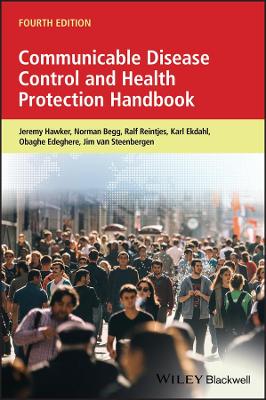
Communicable Disease Control and Health Protection Handbook
 -15%
portes grátis
-15%
portes grátis
Communicable Disease Control and Health Protection Handbook
Ekdahl, Karl; Reintjes, Ralf; Hawker, Jeremy; van Steenbergen, Jim E.; Edeghere, Obaghe; Begg, Norman
John Wiley and Sons Ltd
02/2019
480
Mole
Inglês
9781119328049
15 a 20 dias
776
Descrição não disponível.
About the authors ix
Foreword xi
Abbreviations xiii
Section 1: Introduction
1.1 How to use this book 3
1.2 Basic concepts in the epidemiology of infectious disease 5
1.3 Basic concepts in the prevention of infection 8
1.4 Emergency risk communication 13
1.5 Health protection on-call 15
Section 2: Common topics
2.1 Meningitis and meningism 23
2.2 Gastrointestinal infection 26
2.3 Community acquired pneumonia 33
2.4 Rash in pregnancy 37
2.5 Rash and fever in children 39
2.6 Illness in returning travellers 41
2.7 Jaundice 43
2.8 Infection in the immunocompromised 44
Section 3: Diseases
3.1 Amoebic dysentery 51
3.2 Anthrax 52
3.3 Bacillus cereus 55
3.4 Botulism 57
3.5 Brucellosis 61
3.6 Campylobacter 63
3.7 Chickenpox and shingles (varicella-zoster infections) 67
3.8 Chikungunya 69
3.9 Chlamydia pneumoniae 71
3.10 Chlamydia trachomatis 72
3.11 Cholera 75
3.12 CJD and other human transmissible spongiform encephalopathies 77
3.13 Clostridium difficile 79
3.14 Clostridium perfringens 82
3.15 Coronavirus (including MERS and SARS) 84
3.16 Cryptosporidiosis 87
3.17 Cyclosporiasis 92
3.18 Cytomegalovirus 93
3.19 Dengue fever 94
3.20 Diphtheria 96
3.21 Enterococci,including Glycopeptide- Resistant Enterococci (GRE) 98
3.22 Enterovirus infections (including hand, foot and mouth disease) 100
3.23 Epstein- Barr Virus 103
3.24 Giardiasis, 104
3.25 Gram-negative bacteraemia (including carbapenem-resistant enterobacteriaceae) 106
3.26 Gonorrhoea, syphilis and other acute STIs 111
3.27 Hantavirus infection 118
3.28 Head lice 119
3.29 Helicobacter pylori 121
3.30 Hepatitis A 122
3.31 Hepatitis B 126
3.32 Hepatitis C 129
3.33 Hepatitis, delta 132
3.34 Hepatitis E 132
3.35 Herpes simplex 134
3.36 Haemophilus influenza type b (Hib) 136
3.37 HIV 138
3.38 Influenza 143
3.39 Japanese B encephalitis 149
3.40 Legionellosis 149
3.41 Leprosy 152
3.42 Leptospirosis 153
3.43 Listeriosis 155
3.44 Lyme disease 158
3.45 Malaria 160
3.46 Measles 162
3.47 Meningococcal infection 165
3.48 MRSA (Meticillin-Resistant Staphylococcus aureus) 169
3.49 Mumps 173
3.50 Mycoplasma pneumoniae infection 174
3.51 Norovirus 175
3.52 Paratyphoid fever 179
3.53 Parvovirus B19 (fifth disease) 181
3.54 Plague 183
3.55 Pneumococcal infection 185
3.56 Poliomyelitis 188
3.57 Psittacosis 190
3.58 Q fever 192
3.59 Rabies 195
3.60 Relapsing fever 196
3.61 Respiratory Syncytial Virus (RSV) 197
3.62 Ringworm 200
3.63 Rotavirus 204
3.64 Rubella 205
3.65 Salmonellosis 207
3.66 Scabies 211
3.67 Schistosomiasis 215
3.68 Shigellosis 216
3.69 Shiga toxin-producing Escherichia coli (STEC) and other diarrhoeagenic E. coli 220
3.70 Smallpox 227
3.71 Staphylococcal food poisoning 229
3.72 Streptococcal infections 230
3.73 Tetanus 233
3.74 Threadworms 235
3.75 Tick- borne Encephalitis 236
3.76 Toxocariasis 237
3.77 Toxoplasmosis 238
3.78 Tuberculosis (and non-tuberculous mycobacteria) 239
3.79 Tularaemia 248
3.80 Typhoid fever 250
3.81 Vibrio parahaemolyticus infection 253
3.82 Viral haemorrhagic fevers, including Ebola 255
3.83 Warts and verrucae (and molluscum contagiosum) 258
3.84 West Nile virus 260
3.85 Whooping cough 261
3.86 Yellow fever 264
3.87 Yersiniosis 265
3.88 Zika virus infection 267
3.89 Other organisms 270
3.89.1 Bacteria 270
3.89.2 Rickettsia, including typhus and ehrlichia 270
3.89.3 Viruses 277
3.89.4 Protozoa 277
3.89.5 Helminths 282
3.89.6 Fungi and actinomycetes 288
3.89.7 Bites, stings, and venoms 288
3.89.8 Chemical food-borne illness 300
Section 4: Services and organisations
4.1 Surveillance of communicable disease 305
4.2 Managing infectious disease incidents and outbreaks 312
4.3 Community infection control 320
4.4 Hospital infection control 325
4.5 Antimicrobial stewardship 331
4.6 Risks to and from healthcare workers 334
4.7 Co-ordination of immunisation services 338
4.8 Co-ordination of sexual health services 343
4.9 Prevention of blood-borne viral infections 345
4.10 Co-ordination of services for tuberculosis control 350
4.11 Travel health 352
4.12 Migrant and refugee health 355
4.13 Emergency preparedness planning and response 359
4.14 Non- infectious environmental hazards 361
4.15 Managing acute chemical incidents 368
4.16 Managing acute radiation incidents 372
4.17 Deliberate release of biological, chemical or radiological hazards 375
4.18 Clinical governance and audit 384
4.19 Global health security 388
Section 5: Communicable disease control in Europe
5.1 WHO and International Health Regulations 393
5.2 Collaboration within the European Union 396
5.3 Detailed national example: organisational arrangements for health protection, England, 2017 398
5.4 Austria 402
5.5 Belgium 403
5.6 Bulgaria 405
5.7 Croatia 406
5.8 Cyprus 407
5.9 Czech Republic 407
5.10 Denmark 408
5.11 Estonia 410
5.12 Finland 411
5.13 France 412
5.14 Germany 414
5.15 Greece 415
5.16 Hungary 416
5.17 Iceland 417
5.18 Ireland 418
5.19 Italy 420
5.20 Latvia 421
5.21 Lithuania 422
5.22 Luxembourg 423
5.23 Malta 424
5.24 The Netherlands 425
5.25 Norway 427
5.26 Poland 428
5.27 Portugal 429
5.28 Romania 430
5.29 Slovakia 432
5.30 Slovenia 433
5.31 Spain 434
5.32 Sweden 435
5.33 Switzerland 437
5.34 United Kingdom 438
Appendix 1: Guidance documents and books 441
Blood-borne viruses (BBV) 441
Gastrointestinal infections 441
Immunisation 442
Imported infection and travel advice 442
Infection control and healthcare acquired infection 443
Influenza 443
Legionnaires' disease 444
Meningitis and meningococcal infection 444
Preparedness planning 444
Tuberculosis 445
Vector-borne diseases 445
Other 446
Websites containing infectious disease guidelines 446
Index 447
Foreword xi
Abbreviations xiii
Section 1: Introduction
1.1 How to use this book 3
1.2 Basic concepts in the epidemiology of infectious disease 5
1.3 Basic concepts in the prevention of infection 8
1.4 Emergency risk communication 13
1.5 Health protection on-call 15
Section 2: Common topics
2.1 Meningitis and meningism 23
2.2 Gastrointestinal infection 26
2.3 Community acquired pneumonia 33
2.4 Rash in pregnancy 37
2.5 Rash and fever in children 39
2.6 Illness in returning travellers 41
2.7 Jaundice 43
2.8 Infection in the immunocompromised 44
Section 3: Diseases
3.1 Amoebic dysentery 51
3.2 Anthrax 52
3.3 Bacillus cereus 55
3.4 Botulism 57
3.5 Brucellosis 61
3.6 Campylobacter 63
3.7 Chickenpox and shingles (varicella-zoster infections) 67
3.8 Chikungunya 69
3.9 Chlamydia pneumoniae 71
3.10 Chlamydia trachomatis 72
3.11 Cholera 75
3.12 CJD and other human transmissible spongiform encephalopathies 77
3.13 Clostridium difficile 79
3.14 Clostridium perfringens 82
3.15 Coronavirus (including MERS and SARS) 84
3.16 Cryptosporidiosis 87
3.17 Cyclosporiasis 92
3.18 Cytomegalovirus 93
3.19 Dengue fever 94
3.20 Diphtheria 96
3.21 Enterococci,including Glycopeptide- Resistant Enterococci (GRE) 98
3.22 Enterovirus infections (including hand, foot and mouth disease) 100
3.23 Epstein- Barr Virus 103
3.24 Giardiasis, 104
3.25 Gram-negative bacteraemia (including carbapenem-resistant enterobacteriaceae) 106
3.26 Gonorrhoea, syphilis and other acute STIs 111
3.27 Hantavirus infection 118
3.28 Head lice 119
3.29 Helicobacter pylori 121
3.30 Hepatitis A 122
3.31 Hepatitis B 126
3.32 Hepatitis C 129
3.33 Hepatitis, delta 132
3.34 Hepatitis E 132
3.35 Herpes simplex 134
3.36 Haemophilus influenza type b (Hib) 136
3.37 HIV 138
3.38 Influenza 143
3.39 Japanese B encephalitis 149
3.40 Legionellosis 149
3.41 Leprosy 152
3.42 Leptospirosis 153
3.43 Listeriosis 155
3.44 Lyme disease 158
3.45 Malaria 160
3.46 Measles 162
3.47 Meningococcal infection 165
3.48 MRSA (Meticillin-Resistant Staphylococcus aureus) 169
3.49 Mumps 173
3.50 Mycoplasma pneumoniae infection 174
3.51 Norovirus 175
3.52 Paratyphoid fever 179
3.53 Parvovirus B19 (fifth disease) 181
3.54 Plague 183
3.55 Pneumococcal infection 185
3.56 Poliomyelitis 188
3.57 Psittacosis 190
3.58 Q fever 192
3.59 Rabies 195
3.60 Relapsing fever 196
3.61 Respiratory Syncytial Virus (RSV) 197
3.62 Ringworm 200
3.63 Rotavirus 204
3.64 Rubella 205
3.65 Salmonellosis 207
3.66 Scabies 211
3.67 Schistosomiasis 215
3.68 Shigellosis 216
3.69 Shiga toxin-producing Escherichia coli (STEC) and other diarrhoeagenic E. coli 220
3.70 Smallpox 227
3.71 Staphylococcal food poisoning 229
3.72 Streptococcal infections 230
3.73 Tetanus 233
3.74 Threadworms 235
3.75 Tick- borne Encephalitis 236
3.76 Toxocariasis 237
3.77 Toxoplasmosis 238
3.78 Tuberculosis (and non-tuberculous mycobacteria) 239
3.79 Tularaemia 248
3.80 Typhoid fever 250
3.81 Vibrio parahaemolyticus infection 253
3.82 Viral haemorrhagic fevers, including Ebola 255
3.83 Warts and verrucae (and molluscum contagiosum) 258
3.84 West Nile virus 260
3.85 Whooping cough 261
3.86 Yellow fever 264
3.87 Yersiniosis 265
3.88 Zika virus infection 267
3.89 Other organisms 270
3.89.1 Bacteria 270
3.89.2 Rickettsia, including typhus and ehrlichia 270
3.89.3 Viruses 277
3.89.4 Protozoa 277
3.89.5 Helminths 282
3.89.6 Fungi and actinomycetes 288
3.89.7 Bites, stings, and venoms 288
3.89.8 Chemical food-borne illness 300
Section 4: Services and organisations
4.1 Surveillance of communicable disease 305
4.2 Managing infectious disease incidents and outbreaks 312
4.3 Community infection control 320
4.4 Hospital infection control 325
4.5 Antimicrobial stewardship 331
4.6 Risks to and from healthcare workers 334
4.7 Co-ordination of immunisation services 338
4.8 Co-ordination of sexual health services 343
4.9 Prevention of blood-borne viral infections 345
4.10 Co-ordination of services for tuberculosis control 350
4.11 Travel health 352
4.12 Migrant and refugee health 355
4.13 Emergency preparedness planning and response 359
4.14 Non- infectious environmental hazards 361
4.15 Managing acute chemical incidents 368
4.16 Managing acute radiation incidents 372
4.17 Deliberate release of biological, chemical or radiological hazards 375
4.18 Clinical governance and audit 384
4.19 Global health security 388
Section 5: Communicable disease control in Europe
5.1 WHO and International Health Regulations 393
5.2 Collaboration within the European Union 396
5.3 Detailed national example: organisational arrangements for health protection, England, 2017 398
5.4 Austria 402
5.5 Belgium 403
5.6 Bulgaria 405
5.7 Croatia 406
5.8 Cyprus 407
5.9 Czech Republic 407
5.10 Denmark 408
5.11 Estonia 410
5.12 Finland 411
5.13 France 412
5.14 Germany 414
5.15 Greece 415
5.16 Hungary 416
5.17 Iceland 417
5.18 Ireland 418
5.19 Italy 420
5.20 Latvia 421
5.21 Lithuania 422
5.22 Luxembourg 423
5.23 Malta 424
5.24 The Netherlands 425
5.25 Norway 427
5.26 Poland 428
5.27 Portugal 429
5.28 Romania 430
5.29 Slovakia 432
5.30 Slovenia 433
5.31 Spain 434
5.32 Sweden 435
5.33 Switzerland 437
5.34 United Kingdom 438
Appendix 1: Guidance documents and books 441
Blood-borne viruses (BBV) 441
Gastrointestinal infections 441
Immunisation 442
Imported infection and travel advice 442
Infection control and healthcare acquired infection 443
Influenza 443
Legionnaires' disease 444
Meningitis and meningococcal infection 444
Preparedness planning 444
Tuberculosis 445
Vector-borne diseases 445
Other 446
Websites containing infectious disease guidelines 446
Index 447
Este título pertence ao(s) assunto(s) indicados(s). Para ver outros títulos clique no assunto desejado.
<p>Guide to Communicable Disease Control and Health Protection; Text to Communicable Disease Control and Health Protection; Resource to Communicable Disease Control and Health Protection; Understanding Communicable Disease Control and Health Protection; concept in epidemiology of infectious disease; preventing infection; meningitis; gastrointestinal infection; pneumonia in the community; rash and fever in children; illness in travelers; jaundice; immunosuppressed infection; anthrax; botulism; brucellosis; Campylobacter infection; chickenpox and shingles; cholera; coronavirus; cryptosporidiosis; dengue fever; diphtheria; enterococci; giardiasis; gonorrhoea; syphilis; hanatavirus; hepatitis; HIV; influenza; legionellosis; Lyme disease; malaria; measles; meningococcal infection; MRSA; mumps; norovirus; pneumococcal infection; rubella; salmonellosis; scabies; STEC; TB; tetanus; tularaemia; typhoid fever; viral haemorrhagic fevers</p>
About the authors ix
Foreword xi
Abbreviations xiii
Section 1: Introduction
1.1 How to use this book 3
1.2 Basic concepts in the epidemiology of infectious disease 5
1.3 Basic concepts in the prevention of infection 8
1.4 Emergency risk communication 13
1.5 Health protection on-call 15
Section 2: Common topics
2.1 Meningitis and meningism 23
2.2 Gastrointestinal infection 26
2.3 Community acquired pneumonia 33
2.4 Rash in pregnancy 37
2.5 Rash and fever in children 39
2.6 Illness in returning travellers 41
2.7 Jaundice 43
2.8 Infection in the immunocompromised 44
Section 3: Diseases
3.1 Amoebic dysentery 51
3.2 Anthrax 52
3.3 Bacillus cereus 55
3.4 Botulism 57
3.5 Brucellosis 61
3.6 Campylobacter 63
3.7 Chickenpox and shingles (varicella-zoster infections) 67
3.8 Chikungunya 69
3.9 Chlamydia pneumoniae 71
3.10 Chlamydia trachomatis 72
3.11 Cholera 75
3.12 CJD and other human transmissible spongiform encephalopathies 77
3.13 Clostridium difficile 79
3.14 Clostridium perfringens 82
3.15 Coronavirus (including MERS and SARS) 84
3.16 Cryptosporidiosis 87
3.17 Cyclosporiasis 92
3.18 Cytomegalovirus 93
3.19 Dengue fever 94
3.20 Diphtheria 96
3.21 Enterococci,including Glycopeptide- Resistant Enterococci (GRE) 98
3.22 Enterovirus infections (including hand, foot and mouth disease) 100
3.23 Epstein- Barr Virus 103
3.24 Giardiasis, 104
3.25 Gram-negative bacteraemia (including carbapenem-resistant enterobacteriaceae) 106
3.26 Gonorrhoea, syphilis and other acute STIs 111
3.27 Hantavirus infection 118
3.28 Head lice 119
3.29 Helicobacter pylori 121
3.30 Hepatitis A 122
3.31 Hepatitis B 126
3.32 Hepatitis C 129
3.33 Hepatitis, delta 132
3.34 Hepatitis E 132
3.35 Herpes simplex 134
3.36 Haemophilus influenza type b (Hib) 136
3.37 HIV 138
3.38 Influenza 143
3.39 Japanese B encephalitis 149
3.40 Legionellosis 149
3.41 Leprosy 152
3.42 Leptospirosis 153
3.43 Listeriosis 155
3.44 Lyme disease 158
3.45 Malaria 160
3.46 Measles 162
3.47 Meningococcal infection 165
3.48 MRSA (Meticillin-Resistant Staphylococcus aureus) 169
3.49 Mumps 173
3.50 Mycoplasma pneumoniae infection 174
3.51 Norovirus 175
3.52 Paratyphoid fever 179
3.53 Parvovirus B19 (fifth disease) 181
3.54 Plague 183
3.55 Pneumococcal infection 185
3.56 Poliomyelitis 188
3.57 Psittacosis 190
3.58 Q fever 192
3.59 Rabies 195
3.60 Relapsing fever 196
3.61 Respiratory Syncytial Virus (RSV) 197
3.62 Ringworm 200
3.63 Rotavirus 204
3.64 Rubella 205
3.65 Salmonellosis 207
3.66 Scabies 211
3.67 Schistosomiasis 215
3.68 Shigellosis 216
3.69 Shiga toxin-producing Escherichia coli (STEC) and other diarrhoeagenic E. coli 220
3.70 Smallpox 227
3.71 Staphylococcal food poisoning 229
3.72 Streptococcal infections 230
3.73 Tetanus 233
3.74 Threadworms 235
3.75 Tick- borne Encephalitis 236
3.76 Toxocariasis 237
3.77 Toxoplasmosis 238
3.78 Tuberculosis (and non-tuberculous mycobacteria) 239
3.79 Tularaemia 248
3.80 Typhoid fever 250
3.81 Vibrio parahaemolyticus infection 253
3.82 Viral haemorrhagic fevers, including Ebola 255
3.83 Warts and verrucae (and molluscum contagiosum) 258
3.84 West Nile virus 260
3.85 Whooping cough 261
3.86 Yellow fever 264
3.87 Yersiniosis 265
3.88 Zika virus infection 267
3.89 Other organisms 270
3.89.1 Bacteria 270
3.89.2 Rickettsia, including typhus and ehrlichia 270
3.89.3 Viruses 277
3.89.4 Protozoa 277
3.89.5 Helminths 282
3.89.6 Fungi and actinomycetes 288
3.89.7 Bites, stings, and venoms 288
3.89.8 Chemical food-borne illness 300
Section 4: Services and organisations
4.1 Surveillance of communicable disease 305
4.2 Managing infectious disease incidents and outbreaks 312
4.3 Community infection control 320
4.4 Hospital infection control 325
4.5 Antimicrobial stewardship 331
4.6 Risks to and from healthcare workers 334
4.7 Co-ordination of immunisation services 338
4.8 Co-ordination of sexual health services 343
4.9 Prevention of blood-borne viral infections 345
4.10 Co-ordination of services for tuberculosis control 350
4.11 Travel health 352
4.12 Migrant and refugee health 355
4.13 Emergency preparedness planning and response 359
4.14 Non- infectious environmental hazards 361
4.15 Managing acute chemical incidents 368
4.16 Managing acute radiation incidents 372
4.17 Deliberate release of biological, chemical or radiological hazards 375
4.18 Clinical governance and audit 384
4.19 Global health security 388
Section 5: Communicable disease control in Europe
5.1 WHO and International Health Regulations 393
5.2 Collaboration within the European Union 396
5.3 Detailed national example: organisational arrangements for health protection, England, 2017 398
5.4 Austria 402
5.5 Belgium 403
5.6 Bulgaria 405
5.7 Croatia 406
5.8 Cyprus 407
5.9 Czech Republic 407
5.10 Denmark 408
5.11 Estonia 410
5.12 Finland 411
5.13 France 412
5.14 Germany 414
5.15 Greece 415
5.16 Hungary 416
5.17 Iceland 417
5.18 Ireland 418
5.19 Italy 420
5.20 Latvia 421
5.21 Lithuania 422
5.22 Luxembourg 423
5.23 Malta 424
5.24 The Netherlands 425
5.25 Norway 427
5.26 Poland 428
5.27 Portugal 429
5.28 Romania 430
5.29 Slovakia 432
5.30 Slovenia 433
5.31 Spain 434
5.32 Sweden 435
5.33 Switzerland 437
5.34 United Kingdom 438
Appendix 1: Guidance documents and books 441
Blood-borne viruses (BBV) 441
Gastrointestinal infections 441
Immunisation 442
Imported infection and travel advice 442
Infection control and healthcare acquired infection 443
Influenza 443
Legionnaires' disease 444
Meningitis and meningococcal infection 444
Preparedness planning 444
Tuberculosis 445
Vector-borne diseases 445
Other 446
Websites containing infectious disease guidelines 446
Index 447
Foreword xi
Abbreviations xiii
Section 1: Introduction
1.1 How to use this book 3
1.2 Basic concepts in the epidemiology of infectious disease 5
1.3 Basic concepts in the prevention of infection 8
1.4 Emergency risk communication 13
1.5 Health protection on-call 15
Section 2: Common topics
2.1 Meningitis and meningism 23
2.2 Gastrointestinal infection 26
2.3 Community acquired pneumonia 33
2.4 Rash in pregnancy 37
2.5 Rash and fever in children 39
2.6 Illness in returning travellers 41
2.7 Jaundice 43
2.8 Infection in the immunocompromised 44
Section 3: Diseases
3.1 Amoebic dysentery 51
3.2 Anthrax 52
3.3 Bacillus cereus 55
3.4 Botulism 57
3.5 Brucellosis 61
3.6 Campylobacter 63
3.7 Chickenpox and shingles (varicella-zoster infections) 67
3.8 Chikungunya 69
3.9 Chlamydia pneumoniae 71
3.10 Chlamydia trachomatis 72
3.11 Cholera 75
3.12 CJD and other human transmissible spongiform encephalopathies 77
3.13 Clostridium difficile 79
3.14 Clostridium perfringens 82
3.15 Coronavirus (including MERS and SARS) 84
3.16 Cryptosporidiosis 87
3.17 Cyclosporiasis 92
3.18 Cytomegalovirus 93
3.19 Dengue fever 94
3.20 Diphtheria 96
3.21 Enterococci,including Glycopeptide- Resistant Enterococci (GRE) 98
3.22 Enterovirus infections (including hand, foot and mouth disease) 100
3.23 Epstein- Barr Virus 103
3.24 Giardiasis, 104
3.25 Gram-negative bacteraemia (including carbapenem-resistant enterobacteriaceae) 106
3.26 Gonorrhoea, syphilis and other acute STIs 111
3.27 Hantavirus infection 118
3.28 Head lice 119
3.29 Helicobacter pylori 121
3.30 Hepatitis A 122
3.31 Hepatitis B 126
3.32 Hepatitis C 129
3.33 Hepatitis, delta 132
3.34 Hepatitis E 132
3.35 Herpes simplex 134
3.36 Haemophilus influenza type b (Hib) 136
3.37 HIV 138
3.38 Influenza 143
3.39 Japanese B encephalitis 149
3.40 Legionellosis 149
3.41 Leprosy 152
3.42 Leptospirosis 153
3.43 Listeriosis 155
3.44 Lyme disease 158
3.45 Malaria 160
3.46 Measles 162
3.47 Meningococcal infection 165
3.48 MRSA (Meticillin-Resistant Staphylococcus aureus) 169
3.49 Mumps 173
3.50 Mycoplasma pneumoniae infection 174
3.51 Norovirus 175
3.52 Paratyphoid fever 179
3.53 Parvovirus B19 (fifth disease) 181
3.54 Plague 183
3.55 Pneumococcal infection 185
3.56 Poliomyelitis 188
3.57 Psittacosis 190
3.58 Q fever 192
3.59 Rabies 195
3.60 Relapsing fever 196
3.61 Respiratory Syncytial Virus (RSV) 197
3.62 Ringworm 200
3.63 Rotavirus 204
3.64 Rubella 205
3.65 Salmonellosis 207
3.66 Scabies 211
3.67 Schistosomiasis 215
3.68 Shigellosis 216
3.69 Shiga toxin-producing Escherichia coli (STEC) and other diarrhoeagenic E. coli 220
3.70 Smallpox 227
3.71 Staphylococcal food poisoning 229
3.72 Streptococcal infections 230
3.73 Tetanus 233
3.74 Threadworms 235
3.75 Tick- borne Encephalitis 236
3.76 Toxocariasis 237
3.77 Toxoplasmosis 238
3.78 Tuberculosis (and non-tuberculous mycobacteria) 239
3.79 Tularaemia 248
3.80 Typhoid fever 250
3.81 Vibrio parahaemolyticus infection 253
3.82 Viral haemorrhagic fevers, including Ebola 255
3.83 Warts and verrucae (and molluscum contagiosum) 258
3.84 West Nile virus 260
3.85 Whooping cough 261
3.86 Yellow fever 264
3.87 Yersiniosis 265
3.88 Zika virus infection 267
3.89 Other organisms 270
3.89.1 Bacteria 270
3.89.2 Rickettsia, including typhus and ehrlichia 270
3.89.3 Viruses 277
3.89.4 Protozoa 277
3.89.5 Helminths 282
3.89.6 Fungi and actinomycetes 288
3.89.7 Bites, stings, and venoms 288
3.89.8 Chemical food-borne illness 300
Section 4: Services and organisations
4.1 Surveillance of communicable disease 305
4.2 Managing infectious disease incidents and outbreaks 312
4.3 Community infection control 320
4.4 Hospital infection control 325
4.5 Antimicrobial stewardship 331
4.6 Risks to and from healthcare workers 334
4.7 Co-ordination of immunisation services 338
4.8 Co-ordination of sexual health services 343
4.9 Prevention of blood-borne viral infections 345
4.10 Co-ordination of services for tuberculosis control 350
4.11 Travel health 352
4.12 Migrant and refugee health 355
4.13 Emergency preparedness planning and response 359
4.14 Non- infectious environmental hazards 361
4.15 Managing acute chemical incidents 368
4.16 Managing acute radiation incidents 372
4.17 Deliberate release of biological, chemical or radiological hazards 375
4.18 Clinical governance and audit 384
4.19 Global health security 388
Section 5: Communicable disease control in Europe
5.1 WHO and International Health Regulations 393
5.2 Collaboration within the European Union 396
5.3 Detailed national example: organisational arrangements for health protection, England, 2017 398
5.4 Austria 402
5.5 Belgium 403
5.6 Bulgaria 405
5.7 Croatia 406
5.8 Cyprus 407
5.9 Czech Republic 407
5.10 Denmark 408
5.11 Estonia 410
5.12 Finland 411
5.13 France 412
5.14 Germany 414
5.15 Greece 415
5.16 Hungary 416
5.17 Iceland 417
5.18 Ireland 418
5.19 Italy 420
5.20 Latvia 421
5.21 Lithuania 422
5.22 Luxembourg 423
5.23 Malta 424
5.24 The Netherlands 425
5.25 Norway 427
5.26 Poland 428
5.27 Portugal 429
5.28 Romania 430
5.29 Slovakia 432
5.30 Slovenia 433
5.31 Spain 434
5.32 Sweden 435
5.33 Switzerland 437
5.34 United Kingdom 438
Appendix 1: Guidance documents and books 441
Blood-borne viruses (BBV) 441
Gastrointestinal infections 441
Immunisation 442
Imported infection and travel advice 442
Infection control and healthcare acquired infection 443
Influenza 443
Legionnaires' disease 444
Meningitis and meningococcal infection 444
Preparedness planning 444
Tuberculosis 445
Vector-borne diseases 445
Other 446
Websites containing infectious disease guidelines 446
Index 447
Este título pertence ao(s) assunto(s) indicados(s). Para ver outros títulos clique no assunto desejado.
<p>Guide to Communicable Disease Control and Health Protection; Text to Communicable Disease Control and Health Protection; Resource to Communicable Disease Control and Health Protection; Understanding Communicable Disease Control and Health Protection; concept in epidemiology of infectious disease; preventing infection; meningitis; gastrointestinal infection; pneumonia in the community; rash and fever in children; illness in travelers; jaundice; immunosuppressed infection; anthrax; botulism; brucellosis; Campylobacter infection; chickenpox and shingles; cholera; coronavirus; cryptosporidiosis; dengue fever; diphtheria; enterococci; giardiasis; gonorrhoea; syphilis; hanatavirus; hepatitis; HIV; influenza; legionellosis; Lyme disease; malaria; measles; meningococcal infection; MRSA; mumps; norovirus; pneumococcal infection; rubella; salmonellosis; scabies; STEC; TB; tetanus; tularaemia; typhoid fever; viral haemorrhagic fevers</p>