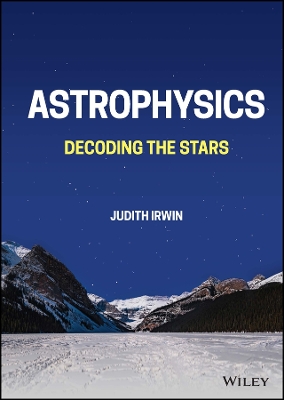
Astrophysics
 -15%
portes grátis
-15%
portes grátis
Astrophysics
Decoding the Stars
Irwin, Judith Ann
John Wiley & Sons Inc
08/2023
368
Dura
Inglês
9781119623557
15 a 20 dias
Descrição não disponível.
Preface xi
Acknowledgements xiii
Introduction xv
I. 1 The Simple Physical Star xvii
I. 2 The Dominance of Gravity for Stars xviii
I. 3 The Numerical and Analytical Star xxii
I. 4 The Theoretical and Observational Star xxiii
Problems xxvi
Chapter 1: The Closest Star 1
1.1 The Sun - First among Equals 2
1.2 The Solar Atmosphere 4
1.2.1 Physical Overview 4
1.2.2 The Photosphere 8
1.2.3 The Chromosphere 10
1.2.4 The Transition Region 12
1.2.5 The Corona 15
1.2.6 Energy Source for Heating the Solar Atmosphere 17
1.3 The Solar Interior 18
1.3.1 The Standard Solar Model (SSM) 18
1.3.2 Solar Rotation 21
1.4 The Magnetic Sun 23
Problems 27
Chapter 2: The Gaseous and Radiative Star - The Basics 29
2.1 The Gaseous Star 29
2.1.1 The Ideal Gas 29
2.1.2 Abundances and Metallicity 31
2.1.3 The Maxwell- Boltzmann Velocity Distribution and Gas Temperature 33
2.1.4 The Mean Molecular Weight 34
2.1.5 Fractional Ionization 35
2.1.6 Pressure of a Partially Ionized Ideal Gas 38
2.1.7 Degrees of Freedom, Adiabatic Index and Specific Heats 38
2.1.8 Adiabatic and Isothermal Gases 41
2.1.9 Gas Motions and the Doppler Shift 43
2.2 The Radiative Star 44
2.3 Stellar Opacities 46
Problems 49
Chapter 3: The Observed Star - Finding the Essential Parameters 53
3.1 Temperature and Spectral Type 54
3.2 Luminosity and Luminosity Class 59
3.3 Chemical Composition 62
3.4 Mass 64
3.4.1 Visual Binaries 67
3.4.2 Spectroscopic Binaries 68
3.5 Radius 71
3.5.1 Eclipsing Binaries 72
3.6 Rotation and Winds 75
Problems 78
Chapter 4: The Shining Star - Interiors 81
4.1 Energy Transport in Stars 82
4.2 Radiative Transport 82
4.2.1 The Rosseland Mean Opacity 83
4.2.2 Analytical Forms for the Mean Opacities 85
4.2.3 The Equation of Radiative Transport 88
4.3 Convective Transport 90
4.3.1 Condition for Convective Instability 90
4.3.2 Mixing Length Theory 95
4.3.3 Real Convection 99
4.4 Conductive Energy Transport in Dense Regions 103
Problems 105
Chapter 5: The Burning Star - Cores 109
5.1 Classical and Quantum Approaches 110
5.2 Energy Generation Rate 112
5.3 Energy Release and Binding Energy 113
5.4 Main Sequence Reactions 116
5.4.1 The PP-chain 117
5.4.2 The CNO Cycle 119
5.5 Reactions after the Main Sequence 121
5.5.1 The Triple-? Process - Helium Burning 122
5.5.2 Additional and Higher Temperature Reactions 123
Problems 125
Chapter 6: The Modelled Star 127
6.1 The Equations of Stellar Structure 127
6.1.1 Conservation of Mass 128
6.1.2 Hydrostatic Equilibrium 129
6.1.3 Energy Conservation 129
6.1.4 Energy Transport 130
6.1.5 Constitutive Relations 130
6.1.6 Boundary Conditions 131
6.2 Solving the Equations of Stellar Structure 132
6.2.1 Numerical Solutions 132
6.2.2 Conceptual and Analytical Approaches 133
6.3 The Vogt-Russell Theorem, Mass-Luminosity Relation and Mass-Radius Relation 137
Problems 146
Chapter 7: The Quasistatic Star - Energies, Timescales and Limits 149
7.1 The Virial Theorem 150
7.2 Timescales 154
7.2.1 The Dynamical Timescale 154
7.2.2 The Thermal (Kelvin-Helmholtz) Timescale 155
7.2.3 The Nuclear Timescale 156
7.3 Stability 157
7.3.1 Stability against Perturbations 158
7.3.2 Secular Evolution of the Sun along the Main Sequence 158
7.4 The Minimum and Maximum Stable Stars 159
7.4.1 The Lowest-Mass Stars 159
7.4.2 The Highest-Mass Stars 160
7.5 A Main Sequence Primer 164
Problems 166
Chapter 8: The Forming and Ageing Star - Evolution to and from the Main Sequence 169
8.1 The Forming Star 169
8.1.1 The Jeans Criterion and Free-Fall Timescale 170
8.1.2 Real Star Formation 172
8.1.3 Protostars 173
8.1.4 From Protostar to the Zams 177
8.1.5 Number, Mass and Luminosity Functions 182
8.2 The Ageing Star 185
8.2.1 Post-Main-Sequence Evolution of a 1 M Star 186
8.2.2 Post-Main-Sequence Evolution of Stars of Different Mass 193
8.2.3 Connecting Theory with Observations 200
Problems 206
Chapter 9: The Variable Star - Pulsation 209
9.1 Pulsation 211
9.2 Asteroseismology 215
9.3 Radial Pulsation 222
9.4 The Drivers - The Kappa Mechanism 225
9.5 Period-Luminosity Relations 227
Problems 232
Chapter 10: The Dying Star and Its Remnant 233
10.1 Planetary Nebulae 234
10.2 White Dwarfs - Stellar Cinders 236
10.2.1 The Mass-Radius Relation for White Dwarfs 237
10.2.2 The Cooling Curve - A Cosmic Clock 242
10.3 Supernovae 244
10.3.1 Core-Collapse Supernovae 248
10.3.2 Thermonuclear Supernovae 251
10.4 The Densest Remnants - Neutron Stars and Pulsars 254
10.4.1 The Mass-Radius Relation for Neutron Stars 256
10.4.2 Stellar Beacons - Pulsars 257
10.4.3 The P? Relation and Characteristic Age 264
10.5 The Ultimate Stellar Remnants - Black Holes 266
10.5.1 Observational Evidence 269
Problems 272
Chapter 11: A Stellar Invitational 275
Appendix A: Physical and Astronomical Data 279
Appendix B: The Solar Atmosphere 283
Appendix C: The Standard Solar Model 287
Appendix D: Taylor Expansions for the Center of a Star 293
Appendix E: Chandrasekhar's Argument for a Declining Pressure Distribution in a Star 295
Appendix F: Stellar Data 297
Bibliography 301
Index 323
Acknowledgements xiii
Introduction xv
I. 1 The Simple Physical Star xvii
I. 2 The Dominance of Gravity for Stars xviii
I. 3 The Numerical and Analytical Star xxii
I. 4 The Theoretical and Observational Star xxiii
Problems xxvi
Chapter 1: The Closest Star 1
1.1 The Sun - First among Equals 2
1.2 The Solar Atmosphere 4
1.2.1 Physical Overview 4
1.2.2 The Photosphere 8
1.2.3 The Chromosphere 10
1.2.4 The Transition Region 12
1.2.5 The Corona 15
1.2.6 Energy Source for Heating the Solar Atmosphere 17
1.3 The Solar Interior 18
1.3.1 The Standard Solar Model (SSM) 18
1.3.2 Solar Rotation 21
1.4 The Magnetic Sun 23
Problems 27
Chapter 2: The Gaseous and Radiative Star - The Basics 29
2.1 The Gaseous Star 29
2.1.1 The Ideal Gas 29
2.1.2 Abundances and Metallicity 31
2.1.3 The Maxwell- Boltzmann Velocity Distribution and Gas Temperature 33
2.1.4 The Mean Molecular Weight 34
2.1.5 Fractional Ionization 35
2.1.6 Pressure of a Partially Ionized Ideal Gas 38
2.1.7 Degrees of Freedom, Adiabatic Index and Specific Heats 38
2.1.8 Adiabatic and Isothermal Gases 41
2.1.9 Gas Motions and the Doppler Shift 43
2.2 The Radiative Star 44
2.3 Stellar Opacities 46
Problems 49
Chapter 3: The Observed Star - Finding the Essential Parameters 53
3.1 Temperature and Spectral Type 54
3.2 Luminosity and Luminosity Class 59
3.3 Chemical Composition 62
3.4 Mass 64
3.4.1 Visual Binaries 67
3.4.2 Spectroscopic Binaries 68
3.5 Radius 71
3.5.1 Eclipsing Binaries 72
3.6 Rotation and Winds 75
Problems 78
Chapter 4: The Shining Star - Interiors 81
4.1 Energy Transport in Stars 82
4.2 Radiative Transport 82
4.2.1 The Rosseland Mean Opacity 83
4.2.2 Analytical Forms for the Mean Opacities 85
4.2.3 The Equation of Radiative Transport 88
4.3 Convective Transport 90
4.3.1 Condition for Convective Instability 90
4.3.2 Mixing Length Theory 95
4.3.3 Real Convection 99
4.4 Conductive Energy Transport in Dense Regions 103
Problems 105
Chapter 5: The Burning Star - Cores 109
5.1 Classical and Quantum Approaches 110
5.2 Energy Generation Rate 112
5.3 Energy Release and Binding Energy 113
5.4 Main Sequence Reactions 116
5.4.1 The PP-chain 117
5.4.2 The CNO Cycle 119
5.5 Reactions after the Main Sequence 121
5.5.1 The Triple-? Process - Helium Burning 122
5.5.2 Additional and Higher Temperature Reactions 123
Problems 125
Chapter 6: The Modelled Star 127
6.1 The Equations of Stellar Structure 127
6.1.1 Conservation of Mass 128
6.1.2 Hydrostatic Equilibrium 129
6.1.3 Energy Conservation 129
6.1.4 Energy Transport 130
6.1.5 Constitutive Relations 130
6.1.6 Boundary Conditions 131
6.2 Solving the Equations of Stellar Structure 132
6.2.1 Numerical Solutions 132
6.2.2 Conceptual and Analytical Approaches 133
6.3 The Vogt-Russell Theorem, Mass-Luminosity Relation and Mass-Radius Relation 137
Problems 146
Chapter 7: The Quasistatic Star - Energies, Timescales and Limits 149
7.1 The Virial Theorem 150
7.2 Timescales 154
7.2.1 The Dynamical Timescale 154
7.2.2 The Thermal (Kelvin-Helmholtz) Timescale 155
7.2.3 The Nuclear Timescale 156
7.3 Stability 157
7.3.1 Stability against Perturbations 158
7.3.2 Secular Evolution of the Sun along the Main Sequence 158
7.4 The Minimum and Maximum Stable Stars 159
7.4.1 The Lowest-Mass Stars 159
7.4.2 The Highest-Mass Stars 160
7.5 A Main Sequence Primer 164
Problems 166
Chapter 8: The Forming and Ageing Star - Evolution to and from the Main Sequence 169
8.1 The Forming Star 169
8.1.1 The Jeans Criterion and Free-Fall Timescale 170
8.1.2 Real Star Formation 172
8.1.3 Protostars 173
8.1.4 From Protostar to the Zams 177
8.1.5 Number, Mass and Luminosity Functions 182
8.2 The Ageing Star 185
8.2.1 Post-Main-Sequence Evolution of a 1 M Star 186
8.2.2 Post-Main-Sequence Evolution of Stars of Different Mass 193
8.2.3 Connecting Theory with Observations 200
Problems 206
Chapter 9: The Variable Star - Pulsation 209
9.1 Pulsation 211
9.2 Asteroseismology 215
9.3 Radial Pulsation 222
9.4 The Drivers - The Kappa Mechanism 225
9.5 Period-Luminosity Relations 227
Problems 232
Chapter 10: The Dying Star and Its Remnant 233
10.1 Planetary Nebulae 234
10.2 White Dwarfs - Stellar Cinders 236
10.2.1 The Mass-Radius Relation for White Dwarfs 237
10.2.2 The Cooling Curve - A Cosmic Clock 242
10.3 Supernovae 244
10.3.1 Core-Collapse Supernovae 248
10.3.2 Thermonuclear Supernovae 251
10.4 The Densest Remnants - Neutron Stars and Pulsars 254
10.4.1 The Mass-Radius Relation for Neutron Stars 256
10.4.2 Stellar Beacons - Pulsars 257
10.4.3 The P? Relation and Characteristic Age 264
10.5 The Ultimate Stellar Remnants - Black Holes 266
10.5.1 Observational Evidence 269
Problems 272
Chapter 11: A Stellar Invitational 275
Appendix A: Physical and Astronomical Data 279
Appendix B: The Solar Atmosphere 283
Appendix C: The Standard Solar Model 287
Appendix D: Taylor Expansions for the Center of a Star 293
Appendix E: Chandrasekhar's Argument for a Declining Pressure Distribution in a Star 295
Appendix F: Stellar Data 297
Bibliography 301
Index 323
Este título pertence ao(s) assunto(s) indicados(s). Para ver outros títulos clique no assunto desejado.
star theories; star principles; star observations; star physics; gaseous and radiative processes; stellar interiors; stellar cores; nuclear energy generation; stellar atmospheres; variable stars; protostars; main sequence; HR diagram; star formation; star endings; white dwarfs; neutron stars; black holes
Preface xi
Acknowledgements xiii
Introduction xv
I. 1 The Simple Physical Star xvii
I. 2 The Dominance of Gravity for Stars xviii
I. 3 The Numerical and Analytical Star xxii
I. 4 The Theoretical and Observational Star xxiii
Problems xxvi
Chapter 1: The Closest Star 1
1.1 The Sun - First among Equals 2
1.2 The Solar Atmosphere 4
1.2.1 Physical Overview 4
1.2.2 The Photosphere 8
1.2.3 The Chromosphere 10
1.2.4 The Transition Region 12
1.2.5 The Corona 15
1.2.6 Energy Source for Heating the Solar Atmosphere 17
1.3 The Solar Interior 18
1.3.1 The Standard Solar Model (SSM) 18
1.3.2 Solar Rotation 21
1.4 The Magnetic Sun 23
Problems 27
Chapter 2: The Gaseous and Radiative Star - The Basics 29
2.1 The Gaseous Star 29
2.1.1 The Ideal Gas 29
2.1.2 Abundances and Metallicity 31
2.1.3 The Maxwell- Boltzmann Velocity Distribution and Gas Temperature 33
2.1.4 The Mean Molecular Weight 34
2.1.5 Fractional Ionization 35
2.1.6 Pressure of a Partially Ionized Ideal Gas 38
2.1.7 Degrees of Freedom, Adiabatic Index and Specific Heats 38
2.1.8 Adiabatic and Isothermal Gases 41
2.1.9 Gas Motions and the Doppler Shift 43
2.2 The Radiative Star 44
2.3 Stellar Opacities 46
Problems 49
Chapter 3: The Observed Star - Finding the Essential Parameters 53
3.1 Temperature and Spectral Type 54
3.2 Luminosity and Luminosity Class 59
3.3 Chemical Composition 62
3.4 Mass 64
3.4.1 Visual Binaries 67
3.4.2 Spectroscopic Binaries 68
3.5 Radius 71
3.5.1 Eclipsing Binaries 72
3.6 Rotation and Winds 75
Problems 78
Chapter 4: The Shining Star - Interiors 81
4.1 Energy Transport in Stars 82
4.2 Radiative Transport 82
4.2.1 The Rosseland Mean Opacity 83
4.2.2 Analytical Forms for the Mean Opacities 85
4.2.3 The Equation of Radiative Transport 88
4.3 Convective Transport 90
4.3.1 Condition for Convective Instability 90
4.3.2 Mixing Length Theory 95
4.3.3 Real Convection 99
4.4 Conductive Energy Transport in Dense Regions 103
Problems 105
Chapter 5: The Burning Star - Cores 109
5.1 Classical and Quantum Approaches 110
5.2 Energy Generation Rate 112
5.3 Energy Release and Binding Energy 113
5.4 Main Sequence Reactions 116
5.4.1 The PP-chain 117
5.4.2 The CNO Cycle 119
5.5 Reactions after the Main Sequence 121
5.5.1 The Triple-? Process - Helium Burning 122
5.5.2 Additional and Higher Temperature Reactions 123
Problems 125
Chapter 6: The Modelled Star 127
6.1 The Equations of Stellar Structure 127
6.1.1 Conservation of Mass 128
6.1.2 Hydrostatic Equilibrium 129
6.1.3 Energy Conservation 129
6.1.4 Energy Transport 130
6.1.5 Constitutive Relations 130
6.1.6 Boundary Conditions 131
6.2 Solving the Equations of Stellar Structure 132
6.2.1 Numerical Solutions 132
6.2.2 Conceptual and Analytical Approaches 133
6.3 The Vogt-Russell Theorem, Mass-Luminosity Relation and Mass-Radius Relation 137
Problems 146
Chapter 7: The Quasistatic Star - Energies, Timescales and Limits 149
7.1 The Virial Theorem 150
7.2 Timescales 154
7.2.1 The Dynamical Timescale 154
7.2.2 The Thermal (Kelvin-Helmholtz) Timescale 155
7.2.3 The Nuclear Timescale 156
7.3 Stability 157
7.3.1 Stability against Perturbations 158
7.3.2 Secular Evolution of the Sun along the Main Sequence 158
7.4 The Minimum and Maximum Stable Stars 159
7.4.1 The Lowest-Mass Stars 159
7.4.2 The Highest-Mass Stars 160
7.5 A Main Sequence Primer 164
Problems 166
Chapter 8: The Forming and Ageing Star - Evolution to and from the Main Sequence 169
8.1 The Forming Star 169
8.1.1 The Jeans Criterion and Free-Fall Timescale 170
8.1.2 Real Star Formation 172
8.1.3 Protostars 173
8.1.4 From Protostar to the Zams 177
8.1.5 Number, Mass and Luminosity Functions 182
8.2 The Ageing Star 185
8.2.1 Post-Main-Sequence Evolution of a 1 M Star 186
8.2.2 Post-Main-Sequence Evolution of Stars of Different Mass 193
8.2.3 Connecting Theory with Observations 200
Problems 206
Chapter 9: The Variable Star - Pulsation 209
9.1 Pulsation 211
9.2 Asteroseismology 215
9.3 Radial Pulsation 222
9.4 The Drivers - The Kappa Mechanism 225
9.5 Period-Luminosity Relations 227
Problems 232
Chapter 10: The Dying Star and Its Remnant 233
10.1 Planetary Nebulae 234
10.2 White Dwarfs - Stellar Cinders 236
10.2.1 The Mass-Radius Relation for White Dwarfs 237
10.2.2 The Cooling Curve - A Cosmic Clock 242
10.3 Supernovae 244
10.3.1 Core-Collapse Supernovae 248
10.3.2 Thermonuclear Supernovae 251
10.4 The Densest Remnants - Neutron Stars and Pulsars 254
10.4.1 The Mass-Radius Relation for Neutron Stars 256
10.4.2 Stellar Beacons - Pulsars 257
10.4.3 The P? Relation and Characteristic Age 264
10.5 The Ultimate Stellar Remnants - Black Holes 266
10.5.1 Observational Evidence 269
Problems 272
Chapter 11: A Stellar Invitational 275
Appendix A: Physical and Astronomical Data 279
Appendix B: The Solar Atmosphere 283
Appendix C: The Standard Solar Model 287
Appendix D: Taylor Expansions for the Center of a Star 293
Appendix E: Chandrasekhar's Argument for a Declining Pressure Distribution in a Star 295
Appendix F: Stellar Data 297
Bibliography 301
Index 323
Acknowledgements xiii
Introduction xv
I. 1 The Simple Physical Star xvii
I. 2 The Dominance of Gravity for Stars xviii
I. 3 The Numerical and Analytical Star xxii
I. 4 The Theoretical and Observational Star xxiii
Problems xxvi
Chapter 1: The Closest Star 1
1.1 The Sun - First among Equals 2
1.2 The Solar Atmosphere 4
1.2.1 Physical Overview 4
1.2.2 The Photosphere 8
1.2.3 The Chromosphere 10
1.2.4 The Transition Region 12
1.2.5 The Corona 15
1.2.6 Energy Source for Heating the Solar Atmosphere 17
1.3 The Solar Interior 18
1.3.1 The Standard Solar Model (SSM) 18
1.3.2 Solar Rotation 21
1.4 The Magnetic Sun 23
Problems 27
Chapter 2: The Gaseous and Radiative Star - The Basics 29
2.1 The Gaseous Star 29
2.1.1 The Ideal Gas 29
2.1.2 Abundances and Metallicity 31
2.1.3 The Maxwell- Boltzmann Velocity Distribution and Gas Temperature 33
2.1.4 The Mean Molecular Weight 34
2.1.5 Fractional Ionization 35
2.1.6 Pressure of a Partially Ionized Ideal Gas 38
2.1.7 Degrees of Freedom, Adiabatic Index and Specific Heats 38
2.1.8 Adiabatic and Isothermal Gases 41
2.1.9 Gas Motions and the Doppler Shift 43
2.2 The Radiative Star 44
2.3 Stellar Opacities 46
Problems 49
Chapter 3: The Observed Star - Finding the Essential Parameters 53
3.1 Temperature and Spectral Type 54
3.2 Luminosity and Luminosity Class 59
3.3 Chemical Composition 62
3.4 Mass 64
3.4.1 Visual Binaries 67
3.4.2 Spectroscopic Binaries 68
3.5 Radius 71
3.5.1 Eclipsing Binaries 72
3.6 Rotation and Winds 75
Problems 78
Chapter 4: The Shining Star - Interiors 81
4.1 Energy Transport in Stars 82
4.2 Radiative Transport 82
4.2.1 The Rosseland Mean Opacity 83
4.2.2 Analytical Forms for the Mean Opacities 85
4.2.3 The Equation of Radiative Transport 88
4.3 Convective Transport 90
4.3.1 Condition for Convective Instability 90
4.3.2 Mixing Length Theory 95
4.3.3 Real Convection 99
4.4 Conductive Energy Transport in Dense Regions 103
Problems 105
Chapter 5: The Burning Star - Cores 109
5.1 Classical and Quantum Approaches 110
5.2 Energy Generation Rate 112
5.3 Energy Release and Binding Energy 113
5.4 Main Sequence Reactions 116
5.4.1 The PP-chain 117
5.4.2 The CNO Cycle 119
5.5 Reactions after the Main Sequence 121
5.5.1 The Triple-? Process - Helium Burning 122
5.5.2 Additional and Higher Temperature Reactions 123
Problems 125
Chapter 6: The Modelled Star 127
6.1 The Equations of Stellar Structure 127
6.1.1 Conservation of Mass 128
6.1.2 Hydrostatic Equilibrium 129
6.1.3 Energy Conservation 129
6.1.4 Energy Transport 130
6.1.5 Constitutive Relations 130
6.1.6 Boundary Conditions 131
6.2 Solving the Equations of Stellar Structure 132
6.2.1 Numerical Solutions 132
6.2.2 Conceptual and Analytical Approaches 133
6.3 The Vogt-Russell Theorem, Mass-Luminosity Relation and Mass-Radius Relation 137
Problems 146
Chapter 7: The Quasistatic Star - Energies, Timescales and Limits 149
7.1 The Virial Theorem 150
7.2 Timescales 154
7.2.1 The Dynamical Timescale 154
7.2.2 The Thermal (Kelvin-Helmholtz) Timescale 155
7.2.3 The Nuclear Timescale 156
7.3 Stability 157
7.3.1 Stability against Perturbations 158
7.3.2 Secular Evolution of the Sun along the Main Sequence 158
7.4 The Minimum and Maximum Stable Stars 159
7.4.1 The Lowest-Mass Stars 159
7.4.2 The Highest-Mass Stars 160
7.5 A Main Sequence Primer 164
Problems 166
Chapter 8: The Forming and Ageing Star - Evolution to and from the Main Sequence 169
8.1 The Forming Star 169
8.1.1 The Jeans Criterion and Free-Fall Timescale 170
8.1.2 Real Star Formation 172
8.1.3 Protostars 173
8.1.4 From Protostar to the Zams 177
8.1.5 Number, Mass and Luminosity Functions 182
8.2 The Ageing Star 185
8.2.1 Post-Main-Sequence Evolution of a 1 M Star 186
8.2.2 Post-Main-Sequence Evolution of Stars of Different Mass 193
8.2.3 Connecting Theory with Observations 200
Problems 206
Chapter 9: The Variable Star - Pulsation 209
9.1 Pulsation 211
9.2 Asteroseismology 215
9.3 Radial Pulsation 222
9.4 The Drivers - The Kappa Mechanism 225
9.5 Period-Luminosity Relations 227
Problems 232
Chapter 10: The Dying Star and Its Remnant 233
10.1 Planetary Nebulae 234
10.2 White Dwarfs - Stellar Cinders 236
10.2.1 The Mass-Radius Relation for White Dwarfs 237
10.2.2 The Cooling Curve - A Cosmic Clock 242
10.3 Supernovae 244
10.3.1 Core-Collapse Supernovae 248
10.3.2 Thermonuclear Supernovae 251
10.4 The Densest Remnants - Neutron Stars and Pulsars 254
10.4.1 The Mass-Radius Relation for Neutron Stars 256
10.4.2 Stellar Beacons - Pulsars 257
10.4.3 The P? Relation and Characteristic Age 264
10.5 The Ultimate Stellar Remnants - Black Holes 266
10.5.1 Observational Evidence 269
Problems 272
Chapter 11: A Stellar Invitational 275
Appendix A: Physical and Astronomical Data 279
Appendix B: The Solar Atmosphere 283
Appendix C: The Standard Solar Model 287
Appendix D: Taylor Expansions for the Center of a Star 293
Appendix E: Chandrasekhar's Argument for a Declining Pressure Distribution in a Star 295
Appendix F: Stellar Data 297
Bibliography 301
Index 323
Este título pertence ao(s) assunto(s) indicados(s). Para ver outros títulos clique no assunto desejado.
star theories; star principles; star observations; star physics; gaseous and radiative processes; stellar interiors; stellar cores; nuclear energy generation; stellar atmospheres; variable stars; protostars; main sequence; HR diagram; star formation; star endings; white dwarfs; neutron stars; black holes