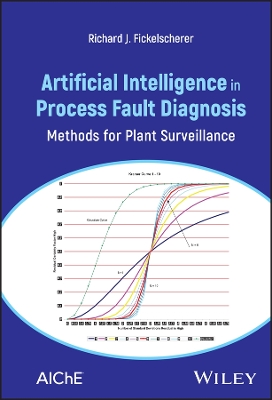
Artificial Intelligence in Process Fault Diagnosis
 -10%
portes grátis
-10%
portes grátis
Artificial Intelligence in Process Fault Diagnosis
Methods for Plant Surveillance
Fickelscherer, Richard J.
John Wiley & Sons Inc
01/2024
432
Dura
Inglês
9781119825890
15 a 20 dias
666
Descrição não disponível.
List of Contributors xix
Foreward xxi
Preface xxiii
Acknowledgements xxv
1 Motivations for Automating Process Fault Analysis 1
1.1 Introduction 2
1.2 The Changing Role of the Process Operators in Plant Operations 4
1.3 Traditional Methods for Performing Process Fault Management 7
1.4 Limitations of Human Operators in Performing Process Fault Management 8
1.5 The Role of Automated Process Fault Analysis 12
2 Various Process Fault Diagnostic Methodologies 16
2.1 Introduction 17
2.2 Various Alternative Diagnostic Strategies Overview 18
2.3 Diagnostic Methodology Choice Conclusions 35
2.A Failure Modes and Effects Analysis 40
3 Alarm Management and Fault Detection 45
3.1 Introduction 46
3.2 Applicable Definitions and Guidelines 46
3.3 The Alarm Management Life Cycle 49
3.4 Generation of Diagnostic Information 53
3.5 Presentation of the Diagnostic Information 55
3.6 Information Rates 59
4 Operator Performance: Simulation and Automation 63
4.1 Background 63
4.2 Automation 65
4.3 Simulation 68
4.4 Research 69
4.5 AI Integration 73
4.6 Case Study: Turbo Expanders Over-Speed 77
4.7 Human-Centered AI 80
5 AI and Alarm Analytics for Failure Analysis and Prevention 85
5.1 Introduction 86
5.2 Post-Alarm Assessment and Analysis 87
5.3 Real-Time Alarm Activity Database and Operator Action Journal 89
5.4 Pre-Alarm Assessment and Analysis 91
5.5 Utilizing Alarm Assessment Information 92
5.6 Examining the Alarm System to Resolve Failures on a Wider Scale 93
5.7 Emerging Methods of Alarm Analysis 99
5.8 Deep Reinforcement Learning for Alarming and Failure Assessment 103
5.9 Some Typical AI and Machine Learning Examples for Further Study 103
5.10 Wrap-Up 111
5.A Process State Transition Logic Employed by the Original FMC Falconeer KBS 112
5.B Process State Transition Logic and its Routine Use in Falconeer IV 123
6 Process Fault Detection Based on Time-Explicit Kiviat Diagram 131
6.1 Introduction 132
6.2 Time-Explicit Kiviat Diagram 133
6.3 Fault Detection Based on the Time-Explicit Kiviat Diagram 134
6.4 Continuous Processes 136
6.5 Batch Processes 138
6.6 Periodic Processes 140
6.7 Case Studies 141
6.8 Continuous Processes 141
6.9 Batch Processes 144
6.10 Periodic Processes 147
6.11 Conclusions 149
6.A Virtual Statistical Process Control Analysis 151
7 Smart Manufacturing and Real-Time Chemical Process Health Monitoring and Diagnostic Localization 160
7.1 Introduction to Process Operational Health Modeling 163
7.2 Diagnostic Localization - Key Concepts 165
7.3 Time 178
7.4 The Workflow of Diagnostic Localization 184
7.5 DL-CLA Use Case Implementation: Nova Chemical Ethylene Splitter 191
7.6 Analyzing Potential Malfunctions Over Time 198
7.7 Analysis of Various Operational Scenarios 201
7.8 DL-CLA Integration with Smart Manufacturing (SM) 208
7.9 AN FR Model Library 210
7.10 Conclusions 216
8 Optimal Quantitative Model-Based Process Fault Diagnosis 221
8.1 Introduction 222
8.2 Process Fault Analysis Concept Terminology 223
8.3 MOME Quantitative Models Overview 226
8.4 MOME Quantitative Model Diagnostic Strategy 234
8.5 MOME SV&PFA Diagnostic Rules' Logic Compiler Motivations 248
8.6 MOME Fuzzy Logic Algorithm Overview 250
8.7 Summary of the Mome Diagnostic Strategy 265
8.8 Actual Process System KBS Application Performance Results 266
8.9 Conclusions 267
8.A Falconeer IV Fuzzy Logic Algorithm Pseudo-Code 272
8.B Mome Conclusions 281
9 Fault Detection Using Artificial Intelligence and Machine Learning 286
9.1 Introduction 287
9.2 Artificial Intelligence 287
9.3 Machine Learning 288
9.4 Engineered Features 290
9.5 Machine Learning Algorithms 291
10 Knowledge-Based Systems 300
10.1 Introduction 301
10.2 Knowledge 301
10.3 Information Required for Diagnosis 304
10.4 Knowledge Representation 305
10.5 Maintaining, Updating, and Extending Knowledge 309
10.6 Expert Systems 311
10.7 Digitization, Digitalization, Digital Transformation, and Digital Twins 319
10.8 Fault Diagnosis with Knowledge-Based Systems 322
10.9 Graphical Representation of Fault Diagnosis 325
10.10 Conclusions 337
10.A Compressor Trip Prediction 340
11 The Falcon Project 343
11.1 Introduction 344
11.2 The Diagnostic Philosophy Underlying the Falcon System 345
11.3 Target Process System 346
11.4 The Fielded Falcon System 348
11.5 The Derivation of the FALCON Diagnostic Knowledge Base 355
11.6 The Ideal FALCON System 369
11.7 Use of the Knowledge-Based System Paradigm in Problem
12 Fault Diagnostic Application Implementation and Sustainability 374
12.1 Key Principles of Successfully Implementing New Technology 375
12.2 Expectation of Advanced Technology 376
12.3 Defining Success 379
12.4 Learning from History 379
12.5 Example: Regulatory Control Loop Monitoring 380
12.6 What Success Looks Like 385
12.7 Example: Systematic Stewardship 386
12.8 Conclusions 387
13 Process Operators, Advanced Process Control, and Artificial Intelligence-Based Applications in the Control Room 389
13.1 Introduction 391
13.2 History of Sustainable APC 392
13.3 Operators as Ultimate APC Application End Users 394
13.4 APC Application Design Considerations 395
13.5 APC Development - Internal Versus External Experts 398
13.6 APC Technology 398
13.7 APC Support 400
13.8 Conclusions 402
References 402
Index 404
Foreward xxi
Preface xxiii
Acknowledgements xxv
1 Motivations for Automating Process Fault Analysis 1
1.1 Introduction 2
1.2 The Changing Role of the Process Operators in Plant Operations 4
1.3 Traditional Methods for Performing Process Fault Management 7
1.4 Limitations of Human Operators in Performing Process Fault Management 8
1.5 The Role of Automated Process Fault Analysis 12
2 Various Process Fault Diagnostic Methodologies 16
2.1 Introduction 17
2.2 Various Alternative Diagnostic Strategies Overview 18
2.3 Diagnostic Methodology Choice Conclusions 35
2.A Failure Modes and Effects Analysis 40
3 Alarm Management and Fault Detection 45
3.1 Introduction 46
3.2 Applicable Definitions and Guidelines 46
3.3 The Alarm Management Life Cycle 49
3.4 Generation of Diagnostic Information 53
3.5 Presentation of the Diagnostic Information 55
3.6 Information Rates 59
4 Operator Performance: Simulation and Automation 63
4.1 Background 63
4.2 Automation 65
4.3 Simulation 68
4.4 Research 69
4.5 AI Integration 73
4.6 Case Study: Turbo Expanders Over-Speed 77
4.7 Human-Centered AI 80
5 AI and Alarm Analytics for Failure Analysis and Prevention 85
5.1 Introduction 86
5.2 Post-Alarm Assessment and Analysis 87
5.3 Real-Time Alarm Activity Database and Operator Action Journal 89
5.4 Pre-Alarm Assessment and Analysis 91
5.5 Utilizing Alarm Assessment Information 92
5.6 Examining the Alarm System to Resolve Failures on a Wider Scale 93
5.7 Emerging Methods of Alarm Analysis 99
5.8 Deep Reinforcement Learning for Alarming and Failure Assessment 103
5.9 Some Typical AI and Machine Learning Examples for Further Study 103
5.10 Wrap-Up 111
5.A Process State Transition Logic Employed by the Original FMC Falconeer KBS 112
5.B Process State Transition Logic and its Routine Use in Falconeer IV 123
6 Process Fault Detection Based on Time-Explicit Kiviat Diagram 131
6.1 Introduction 132
6.2 Time-Explicit Kiviat Diagram 133
6.3 Fault Detection Based on the Time-Explicit Kiviat Diagram 134
6.4 Continuous Processes 136
6.5 Batch Processes 138
6.6 Periodic Processes 140
6.7 Case Studies 141
6.8 Continuous Processes 141
6.9 Batch Processes 144
6.10 Periodic Processes 147
6.11 Conclusions 149
6.A Virtual Statistical Process Control Analysis 151
7 Smart Manufacturing and Real-Time Chemical Process Health Monitoring and Diagnostic Localization 160
7.1 Introduction to Process Operational Health Modeling 163
7.2 Diagnostic Localization - Key Concepts 165
7.3 Time 178
7.4 The Workflow of Diagnostic Localization 184
7.5 DL-CLA Use Case Implementation: Nova Chemical Ethylene Splitter 191
7.6 Analyzing Potential Malfunctions Over Time 198
7.7 Analysis of Various Operational Scenarios 201
7.8 DL-CLA Integration with Smart Manufacturing (SM) 208
7.9 AN FR Model Library 210
7.10 Conclusions 216
8 Optimal Quantitative Model-Based Process Fault Diagnosis 221
8.1 Introduction 222
8.2 Process Fault Analysis Concept Terminology 223
8.3 MOME Quantitative Models Overview 226
8.4 MOME Quantitative Model Diagnostic Strategy 234
8.5 MOME SV&PFA Diagnostic Rules' Logic Compiler Motivations 248
8.6 MOME Fuzzy Logic Algorithm Overview 250
8.7 Summary of the Mome Diagnostic Strategy 265
8.8 Actual Process System KBS Application Performance Results 266
8.9 Conclusions 267
8.A Falconeer IV Fuzzy Logic Algorithm Pseudo-Code 272
8.B Mome Conclusions 281
9 Fault Detection Using Artificial Intelligence and Machine Learning 286
9.1 Introduction 287
9.2 Artificial Intelligence 287
9.3 Machine Learning 288
9.4 Engineered Features 290
9.5 Machine Learning Algorithms 291
10 Knowledge-Based Systems 300
10.1 Introduction 301
10.2 Knowledge 301
10.3 Information Required for Diagnosis 304
10.4 Knowledge Representation 305
10.5 Maintaining, Updating, and Extending Knowledge 309
10.6 Expert Systems 311
10.7 Digitization, Digitalization, Digital Transformation, and Digital Twins 319
10.8 Fault Diagnosis with Knowledge-Based Systems 322
10.9 Graphical Representation of Fault Diagnosis 325
10.10 Conclusions 337
10.A Compressor Trip Prediction 340
11 The Falcon Project 343
11.1 Introduction 344
11.2 The Diagnostic Philosophy Underlying the Falcon System 345
11.3 Target Process System 346
11.4 The Fielded Falcon System 348
11.5 The Derivation of the FALCON Diagnostic Knowledge Base 355
11.6 The Ideal FALCON System 369
11.7 Use of the Knowledge-Based System Paradigm in Problem
12 Fault Diagnostic Application Implementation and Sustainability 374
12.1 Key Principles of Successfully Implementing New Technology 375
12.2 Expectation of Advanced Technology 376
12.3 Defining Success 379
12.4 Learning from History 379
12.5 Example: Regulatory Control Loop Monitoring 380
12.6 What Success Looks Like 385
12.7 Example: Systematic Stewardship 386
12.8 Conclusions 387
13 Process Operators, Advanced Process Control, and Artificial Intelligence-Based Applications in the Control Room 389
13.1 Introduction 391
13.2 History of Sustainable APC 392
13.3 Operators as Ultimate APC Application End Users 394
13.4 APC Application Design Considerations 395
13.5 APC Development - Internal Versus External Experts 398
13.6 APC Technology 398
13.7 APC Support 400
13.8 Conclusions 402
References 402
Index 404
Este título pertence ao(s) assunto(s) indicados(s). Para ver outros títulos clique no assunto desejado.
Artificial Intelligence; process fault diagnosis; Machine learning; data science; data analysis; process control; process monitoring; Fuzzy logic; emergency process shutdowns; diagnostic strategy; petroleum processing; chemical processing; nuclear processing; operations engineering
List of Contributors xix
Foreward xxi
Preface xxiii
Acknowledgements xxv
1 Motivations for Automating Process Fault Analysis 1
1.1 Introduction 2
1.2 The Changing Role of the Process Operators in Plant Operations 4
1.3 Traditional Methods for Performing Process Fault Management 7
1.4 Limitations of Human Operators in Performing Process Fault Management 8
1.5 The Role of Automated Process Fault Analysis 12
2 Various Process Fault Diagnostic Methodologies 16
2.1 Introduction 17
2.2 Various Alternative Diagnostic Strategies Overview 18
2.3 Diagnostic Methodology Choice Conclusions 35
2.A Failure Modes and Effects Analysis 40
3 Alarm Management and Fault Detection 45
3.1 Introduction 46
3.2 Applicable Definitions and Guidelines 46
3.3 The Alarm Management Life Cycle 49
3.4 Generation of Diagnostic Information 53
3.5 Presentation of the Diagnostic Information 55
3.6 Information Rates 59
4 Operator Performance: Simulation and Automation 63
4.1 Background 63
4.2 Automation 65
4.3 Simulation 68
4.4 Research 69
4.5 AI Integration 73
4.6 Case Study: Turbo Expanders Over-Speed 77
4.7 Human-Centered AI 80
5 AI and Alarm Analytics for Failure Analysis and Prevention 85
5.1 Introduction 86
5.2 Post-Alarm Assessment and Analysis 87
5.3 Real-Time Alarm Activity Database and Operator Action Journal 89
5.4 Pre-Alarm Assessment and Analysis 91
5.5 Utilizing Alarm Assessment Information 92
5.6 Examining the Alarm System to Resolve Failures on a Wider Scale 93
5.7 Emerging Methods of Alarm Analysis 99
5.8 Deep Reinforcement Learning for Alarming and Failure Assessment 103
5.9 Some Typical AI and Machine Learning Examples for Further Study 103
5.10 Wrap-Up 111
5.A Process State Transition Logic Employed by the Original FMC Falconeer KBS 112
5.B Process State Transition Logic and its Routine Use in Falconeer IV 123
6 Process Fault Detection Based on Time-Explicit Kiviat Diagram 131
6.1 Introduction 132
6.2 Time-Explicit Kiviat Diagram 133
6.3 Fault Detection Based on the Time-Explicit Kiviat Diagram 134
6.4 Continuous Processes 136
6.5 Batch Processes 138
6.6 Periodic Processes 140
6.7 Case Studies 141
6.8 Continuous Processes 141
6.9 Batch Processes 144
6.10 Periodic Processes 147
6.11 Conclusions 149
6.A Virtual Statistical Process Control Analysis 151
7 Smart Manufacturing and Real-Time Chemical Process Health Monitoring and Diagnostic Localization 160
7.1 Introduction to Process Operational Health Modeling 163
7.2 Diagnostic Localization - Key Concepts 165
7.3 Time 178
7.4 The Workflow of Diagnostic Localization 184
7.5 DL-CLA Use Case Implementation: Nova Chemical Ethylene Splitter 191
7.6 Analyzing Potential Malfunctions Over Time 198
7.7 Analysis of Various Operational Scenarios 201
7.8 DL-CLA Integration with Smart Manufacturing (SM) 208
7.9 AN FR Model Library 210
7.10 Conclusions 216
8 Optimal Quantitative Model-Based Process Fault Diagnosis 221
8.1 Introduction 222
8.2 Process Fault Analysis Concept Terminology 223
8.3 MOME Quantitative Models Overview 226
8.4 MOME Quantitative Model Diagnostic Strategy 234
8.5 MOME SV&PFA Diagnostic Rules' Logic Compiler Motivations 248
8.6 MOME Fuzzy Logic Algorithm Overview 250
8.7 Summary of the Mome Diagnostic Strategy 265
8.8 Actual Process System KBS Application Performance Results 266
8.9 Conclusions 267
8.A Falconeer IV Fuzzy Logic Algorithm Pseudo-Code 272
8.B Mome Conclusions 281
9 Fault Detection Using Artificial Intelligence and Machine Learning 286
9.1 Introduction 287
9.2 Artificial Intelligence 287
9.3 Machine Learning 288
9.4 Engineered Features 290
9.5 Machine Learning Algorithms 291
10 Knowledge-Based Systems 300
10.1 Introduction 301
10.2 Knowledge 301
10.3 Information Required for Diagnosis 304
10.4 Knowledge Representation 305
10.5 Maintaining, Updating, and Extending Knowledge 309
10.6 Expert Systems 311
10.7 Digitization, Digitalization, Digital Transformation, and Digital Twins 319
10.8 Fault Diagnosis with Knowledge-Based Systems 322
10.9 Graphical Representation of Fault Diagnosis 325
10.10 Conclusions 337
10.A Compressor Trip Prediction 340
11 The Falcon Project 343
11.1 Introduction 344
11.2 The Diagnostic Philosophy Underlying the Falcon System 345
11.3 Target Process System 346
11.4 The Fielded Falcon System 348
11.5 The Derivation of the FALCON Diagnostic Knowledge Base 355
11.6 The Ideal FALCON System 369
11.7 Use of the Knowledge-Based System Paradigm in Problem
12 Fault Diagnostic Application Implementation and Sustainability 374
12.1 Key Principles of Successfully Implementing New Technology 375
12.2 Expectation of Advanced Technology 376
12.3 Defining Success 379
12.4 Learning from History 379
12.5 Example: Regulatory Control Loop Monitoring 380
12.6 What Success Looks Like 385
12.7 Example: Systematic Stewardship 386
12.8 Conclusions 387
13 Process Operators, Advanced Process Control, and Artificial Intelligence-Based Applications in the Control Room 389
13.1 Introduction 391
13.2 History of Sustainable APC 392
13.3 Operators as Ultimate APC Application End Users 394
13.4 APC Application Design Considerations 395
13.5 APC Development - Internal Versus External Experts 398
13.6 APC Technology 398
13.7 APC Support 400
13.8 Conclusions 402
References 402
Index 404
Foreward xxi
Preface xxiii
Acknowledgements xxv
1 Motivations for Automating Process Fault Analysis 1
1.1 Introduction 2
1.2 The Changing Role of the Process Operators in Plant Operations 4
1.3 Traditional Methods for Performing Process Fault Management 7
1.4 Limitations of Human Operators in Performing Process Fault Management 8
1.5 The Role of Automated Process Fault Analysis 12
2 Various Process Fault Diagnostic Methodologies 16
2.1 Introduction 17
2.2 Various Alternative Diagnostic Strategies Overview 18
2.3 Diagnostic Methodology Choice Conclusions 35
2.A Failure Modes and Effects Analysis 40
3 Alarm Management and Fault Detection 45
3.1 Introduction 46
3.2 Applicable Definitions and Guidelines 46
3.3 The Alarm Management Life Cycle 49
3.4 Generation of Diagnostic Information 53
3.5 Presentation of the Diagnostic Information 55
3.6 Information Rates 59
4 Operator Performance: Simulation and Automation 63
4.1 Background 63
4.2 Automation 65
4.3 Simulation 68
4.4 Research 69
4.5 AI Integration 73
4.6 Case Study: Turbo Expanders Over-Speed 77
4.7 Human-Centered AI 80
5 AI and Alarm Analytics for Failure Analysis and Prevention 85
5.1 Introduction 86
5.2 Post-Alarm Assessment and Analysis 87
5.3 Real-Time Alarm Activity Database and Operator Action Journal 89
5.4 Pre-Alarm Assessment and Analysis 91
5.5 Utilizing Alarm Assessment Information 92
5.6 Examining the Alarm System to Resolve Failures on a Wider Scale 93
5.7 Emerging Methods of Alarm Analysis 99
5.8 Deep Reinforcement Learning for Alarming and Failure Assessment 103
5.9 Some Typical AI and Machine Learning Examples for Further Study 103
5.10 Wrap-Up 111
5.A Process State Transition Logic Employed by the Original FMC Falconeer KBS 112
5.B Process State Transition Logic and its Routine Use in Falconeer IV 123
6 Process Fault Detection Based on Time-Explicit Kiviat Diagram 131
6.1 Introduction 132
6.2 Time-Explicit Kiviat Diagram 133
6.3 Fault Detection Based on the Time-Explicit Kiviat Diagram 134
6.4 Continuous Processes 136
6.5 Batch Processes 138
6.6 Periodic Processes 140
6.7 Case Studies 141
6.8 Continuous Processes 141
6.9 Batch Processes 144
6.10 Periodic Processes 147
6.11 Conclusions 149
6.A Virtual Statistical Process Control Analysis 151
7 Smart Manufacturing and Real-Time Chemical Process Health Monitoring and Diagnostic Localization 160
7.1 Introduction to Process Operational Health Modeling 163
7.2 Diagnostic Localization - Key Concepts 165
7.3 Time 178
7.4 The Workflow of Diagnostic Localization 184
7.5 DL-CLA Use Case Implementation: Nova Chemical Ethylene Splitter 191
7.6 Analyzing Potential Malfunctions Over Time 198
7.7 Analysis of Various Operational Scenarios 201
7.8 DL-CLA Integration with Smart Manufacturing (SM) 208
7.9 AN FR Model Library 210
7.10 Conclusions 216
8 Optimal Quantitative Model-Based Process Fault Diagnosis 221
8.1 Introduction 222
8.2 Process Fault Analysis Concept Terminology 223
8.3 MOME Quantitative Models Overview 226
8.4 MOME Quantitative Model Diagnostic Strategy 234
8.5 MOME SV&PFA Diagnostic Rules' Logic Compiler Motivations 248
8.6 MOME Fuzzy Logic Algorithm Overview 250
8.7 Summary of the Mome Diagnostic Strategy 265
8.8 Actual Process System KBS Application Performance Results 266
8.9 Conclusions 267
8.A Falconeer IV Fuzzy Logic Algorithm Pseudo-Code 272
8.B Mome Conclusions 281
9 Fault Detection Using Artificial Intelligence and Machine Learning 286
9.1 Introduction 287
9.2 Artificial Intelligence 287
9.3 Machine Learning 288
9.4 Engineered Features 290
9.5 Machine Learning Algorithms 291
10 Knowledge-Based Systems 300
10.1 Introduction 301
10.2 Knowledge 301
10.3 Information Required for Diagnosis 304
10.4 Knowledge Representation 305
10.5 Maintaining, Updating, and Extending Knowledge 309
10.6 Expert Systems 311
10.7 Digitization, Digitalization, Digital Transformation, and Digital Twins 319
10.8 Fault Diagnosis with Knowledge-Based Systems 322
10.9 Graphical Representation of Fault Diagnosis 325
10.10 Conclusions 337
10.A Compressor Trip Prediction 340
11 The Falcon Project 343
11.1 Introduction 344
11.2 The Diagnostic Philosophy Underlying the Falcon System 345
11.3 Target Process System 346
11.4 The Fielded Falcon System 348
11.5 The Derivation of the FALCON Diagnostic Knowledge Base 355
11.6 The Ideal FALCON System 369
11.7 Use of the Knowledge-Based System Paradigm in Problem
12 Fault Diagnostic Application Implementation and Sustainability 374
12.1 Key Principles of Successfully Implementing New Technology 375
12.2 Expectation of Advanced Technology 376
12.3 Defining Success 379
12.4 Learning from History 379
12.5 Example: Regulatory Control Loop Monitoring 380
12.6 What Success Looks Like 385
12.7 Example: Systematic Stewardship 386
12.8 Conclusions 387
13 Process Operators, Advanced Process Control, and Artificial Intelligence-Based Applications in the Control Room 389
13.1 Introduction 391
13.2 History of Sustainable APC 392
13.3 Operators as Ultimate APC Application End Users 394
13.4 APC Application Design Considerations 395
13.5 APC Development - Internal Versus External Experts 398
13.6 APC Technology 398
13.7 APC Support 400
13.8 Conclusions 402
References 402
Index 404
Este título pertence ao(s) assunto(s) indicados(s). Para ver outros títulos clique no assunto desejado.